

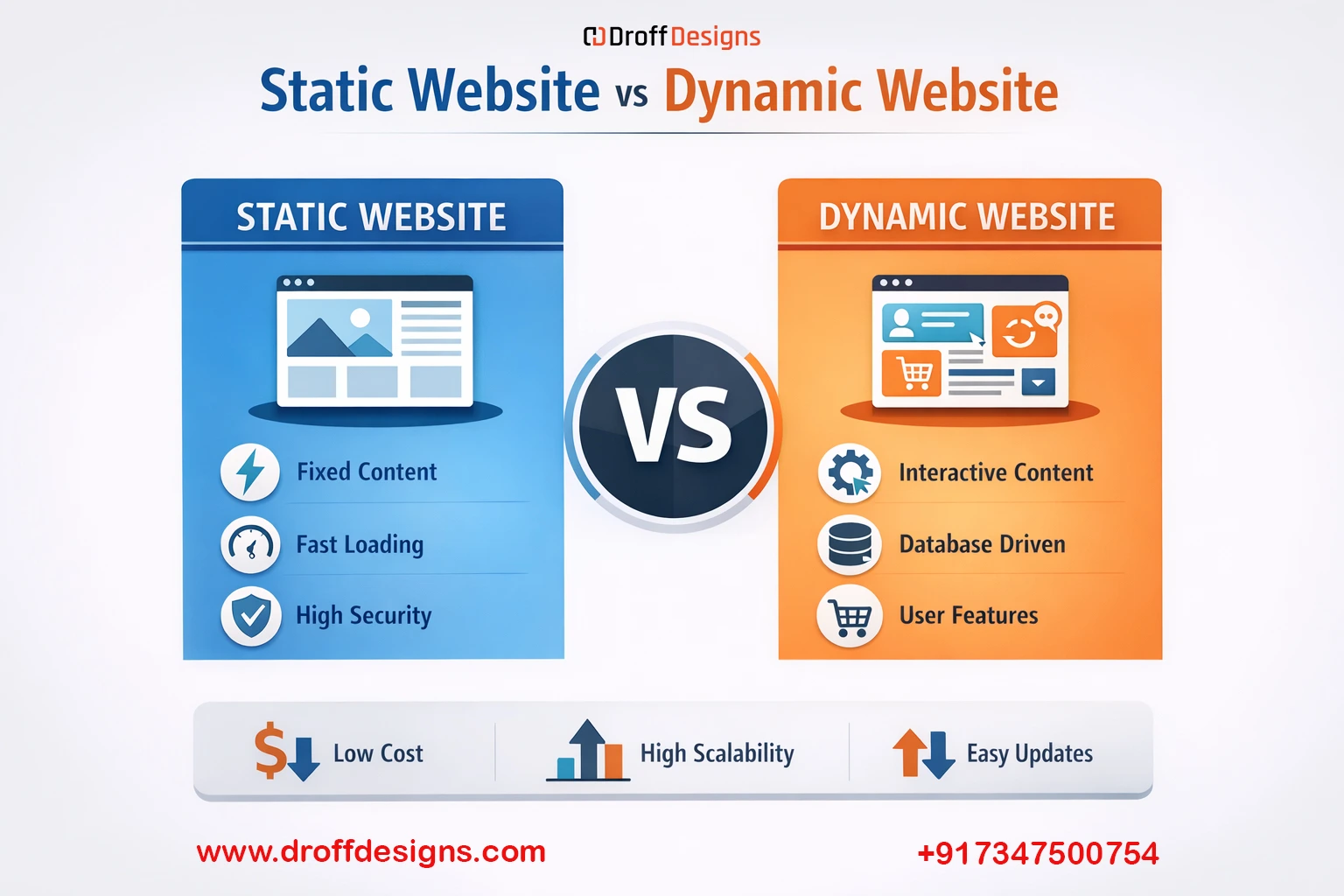
In today’s digital era, having a website is no longer optional for businesses—it is a necessity. However, when planning a website, one common question arises: Should you choose a static website or a dynamic website?
Understanding the difference between a static website vs dynamic website is crucial because the right choice can directly impact your business growth, user experience, and online visibility. In this blog, we will explain what a static website is, what a dynamic website is, their key differences, benefits, and which option is best for your business needs.
Page Contents
ToggleWhat Is a Static Website?
A static website is a type of website where the content remains the same for every visitor. Each page is created using basic technologies like HTML, CSS, and JavaScript, and the content is fixed unless a developer manually updates the code. Static websites do not rely on databases or complex backend systems. Whatever is written on the page is delivered directly to the user’s browser.
Benefits of a Static Website
-
Fast Loading Speed
Static websites load very quickly because there is no database processing involved. Faster loading speed improves user experience and helps with SEO. -
Cost-Effective
The development and maintenance cost of a static website is relatively low, making it an ideal choice for startups and small businesses. -
High Security
Since static websites do not use databases or server-side scripting, the chances of hacking or data breaches are minimal. -
SEO-Friendly Structure
With clean code and proper optimization, static websites can perform well on search engines, especially for local or low-competition keywords. -
Simple Hosting Requirements
Static websites can be hosted easily on basic or shared hosting plans.
When Is a Static Website the Best Choice?
- Small business websites
- Portfolio websites
- Informational websites
- One-page or landing page websites
- Websites with rare content updates
What Is a Dynamic Website?
A dynamic website is a website where content changes based on user interaction, preferences, or real-time updates. These websites are powered by databases and backend technologies such as PHP, Python, Node.js, or CMS platforms like WordPress. Dynamic websites allow content to be updated through an admin panel, without editing code.
Benefits of a Dynamic Website
-
Easy Content Management
Content such as text, images, blog posts, or products can be updated easily through a dashboard. -
Interactive User Experience
Features like contact forms, login systems, comments, live chat, and dashboards are possible only on dynamic websites. -
Scalability
As your business grows, new features and functionalities can be added without rebuilding the entire website. -
Advanced Functionality
E-commerce stores, booking systems, payment gateways, and CRM integrations require a dynamic website. -
Better Personalization
Dynamic websites can display personalized content based on user behavior, improving engagement and conversions.
When Is a Dynamic Website the Best Choice?
- E-commerce websites
- Blogging and content-based websites
- News portals
- Corporate websites with frequent updates
- Membership or subscription-based platforms
Static vs Dynamic Website: Which One Should You Choose?
Choosing between a static website or a dynamic website depends on your business goals, budget, and future plans. If you need a simple, fast, and low-budget website that mainly displays information, a static website is a practical option. It works well for businesses that do not require frequent updates. On the other hand, if your business requires regular content updates, customer interaction, blogging, or online selling, a dynamic website is the better choice. Dynamic websites are more flexible and future-ready.
SEO Perspective: Static Website vs Dynamic Website
From an SEO point of view, both static and dynamic websites can rank well on Google if they are properly optimized.
However, dynamic websites—especially those built on WordPress—offer additional SEO advantages such as blogging, SEO plugins, schema integration, and easier content updates, which help in long-term organic growth.
Final Verdict
There is no one-size-fits-all solution when it comes to static website vs dynamic website. Both have their own advantages and use cases. Choose a static website if you want simplicity, speed, and low cost. Choose a dynamic website if you want scalability, interaction, and advanced functionality. To make the right decision, it is always advisable to consult a professional website designing company that understands your business requirements and long-term digital strategy.